Mobile Is Eating The World - Are Your Ready?

Stunning data about the rise of, and importance of mobile on a global basis.

If you do not have a compelling mobile strategy (and vision) that lies right at the heart of your company and/or if you are not considering how best to leverage mobile as one of your top strategic imperatives, you will eventually be overtaken by those who are.

Win the hearts and minds of consumers on their mobile devices, or risk obsolescence.

Must Watch Interview: NEST Co-founder Matt Rogers

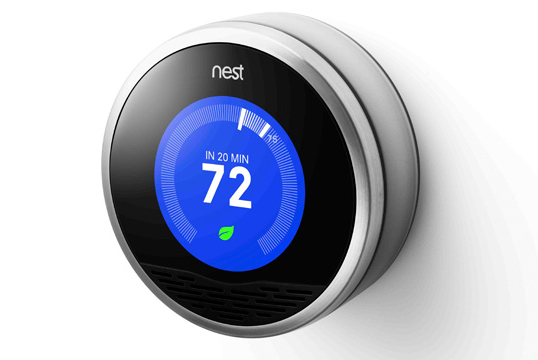
This interview with Matt Rogers, the co-fouder of NEST, is a revealing look at the formation of a truly great startup, and is a must watch for any entrepreneur.  ​

nest-thermostat-img.jpg

Matt left an amazing job at Apple in 2010 to co-found Nest Labs. Nest, which received funding from some of the best venture capitalists in the world including Kleiner Perkins, Lightspeed, Shasta and Google Ventures has revolutionized the mundane and oft ignored home thermostat. And my sense is that there is much more to come from this great company.

Nest is an exciting company at an exciting time. The rise of the internet of things, and the coming of age of the smart home are two interesting trends (among others) driving a renaissance in hardware startups. We're starting to see a plethora of internet connected appliances, from smart watering systems that know all about pending rainfall to power hungry clothes dryers that know when the cheapest electricity is available.

Smart Advertising: Smart Cars To The Rescue

From Creativity Online

To promote Mercedes Smart cars to Russians (who like driving big cars), BBDO Russia actively proved to potential customers the benefits of having a smaller vehicle. Many Russians get towed on weekend shopping trips for parking illegally; and the traffic is also notoriously bad in the city. So in March Smart offered free rides to those stranded by having their vehicles towed - getting them to take a test drive without requesting one, and see what a difference having a small car makes when parking is scarce and traffic heavy.
623 car-less drivers were rescued during three days. The agency encouraged people to thank the Smart brand on social media, while blogs and news portals picked up on the stories and test drives increased 10 fold. Sales increased by 300% in the two weeks following the event.

​This had so many elements of a modern, multi-faceted, ad campaign ... purpose built for social media amplification. 

Re-imagining the UX for iOS 7

With Apple's WWDC just around the corner, we're being teased by the tantalizing possibility that Apple will deliver a much overdue refresh of the UX in iOS 7.

As the conference nears, designers are falling over each other to present their visions of what an iOS 7 remake might entail.

Here is one interesting one - in the spirit of flat design. It comes from the talented folks at SimplyZesty, a Dublin, Ireland based digital agency.​ 

Building A Culture That Works: The CEO As The Cultural Epicenter

In this excellent post, Peter Levine, who's a partner at Andreessen Horowitz, talks about the profound impact a CEO has on the culture of a company.

This is so true ... companies are defined by their cultures ... and cultures are defined from the CEO on down. You cannot manufacture a culture that is inconsistent from the beliefs and actions of a CEO. No matter how hard you try.

It is a must read for any aspiring CEOs. ​Remember that the expectations you have of others must be aligned with the expectations you place on yourself. And that the behaviour of your team will eventually be aligned with, and influenced by, your behaviours.

The organization reflects the behavior and characteristics of the CEO, and that establishes the culture. Foster an environment of open communication and the organization inherits a culture of open communication. Operationally detailed? The organization becomes operationally detailed. Political? The organization becomes political. Curse a lot? The organization curses. Angry? The organization gets angry. Have a big office? Everyone wants a big office. It doesn’t matter what’s written on a coffee mug or on a “culture” slide, what you do as a CEO, day in and day out, and how you behave will define your company’s culture.

Despite the best intentions, companies often become culturally dysfunctional. This occurs when leadership has a perception about the culture that conflicts with reality, or leadership behaves differently than what might be written down.
— http://techcrunch.com/2013/04/27/building-a-culture-that-works-the-ceo-as-the-cultural-epicenter/

Wearing Your Computer

We all know it's coming ... regardless of the manufacturer, or the OS, the smart watch will rise in the near future.​

Shortly a wide range of digital services will be delivered from your wrist ... payments, alerts, IDV, contextual information, directions, etc.

It's rather exciting if you ask me.  But wearable computing raises the bar on usability and design significantly.

Below is a rather stunning 3D render of what such a device might look like, and how it might work.

Re-imagining Education

Sugata Mitra, in this absolutely endearing TED talk, speaks about how the rise of the internet and cloud computing should compel us to re-imagine education ... a system he claims isn't broken, per se, just built for another world and another time.

His stories of how children in the slums of India, left unaided with a computer stuck in a wall, began a self directed journey of learning, is an example of why we might consider a different paradigm for education. No longer just top down, but bottom up.

Another great example of this sort of thinking comes from Salman Khan (founder of the Khan Academy)​. Millions of kids around the world now turn to the Khan Academy's on-line educational videos and multi-media activities to grasp some of the more complex elements of math and science. Why? Because Khan's approach not only makes the topics approachable, amusing and engaging, it enables kids to learn at their own pace.

Watch and find out why one kid said, "this was the first time I smiled doing a derivative". 

Education, done well, can be captivating.  

As Sir Ken Robinson so aptly put it in his TED talk on education:

I think we have to change metaphors. We have to go from what is essentially an industrial model of education, a manufacturing model, which is based on linearity and conformity and batching people. We have to move to a model that is based more on principles of agriculture. We have to recognize that human flourishing is not a mechanical process; it’s an organic process. And you cannot predict the outcome of human development. All you can do, like a farmer, is create the conditions under which they will begin to flourish.
— http://www.ted.com/talks/sir_ken_robinson_bring_on_the_revolution.html

If you are interested in the topic of education, TED has pulled together a list of some of their favourites in a post on their blog. ​

Engaging Advertising

Once in a while, ads come along and cut through the clutter, engage you, amuse you ... and ... deliver the message they intended to. Tor Myren is one of the best at this, and his eTrade Baby ads are some of my favourites.

However, in 2011, Volkswagen debuted a classic ... during, of course, the Superbowl.

What makes a good engineering culture

Great products are built by great engineering teams, and great engineering teams are built on great engineering cultures. The attached post from Edmond Lau (who's an engineer at Quora), is one of the best definitions of what makes a great engineering culture I have seen in a long time.

He focuses on 10 key elements:

  1. Optimize for iteration speed
  2. Push relentlessly toward automation
  3. Build the right software abstractions
  4. Develop a focus on high code quality with code reviews
  5. Maintain a respectful work environment
  6. Build shared ownership of code
  7. Invest in automated testing
  8. Allot 20% Time
  9. Build a culture of learning and continuous improvement
  10. Hire the best 

This all sounds like motherhood and apple pie stuff, but it isn't and I encourage you to read his well written post here


Making Music On The Go

There's no doubt that the iPad has revolutionized music creation on the go. From apps like Garageband (which really set the bar) to newer entrants from old standards like Image Line (FL Mobile), the quality of this ecosystem has risen exponentially over the last year.

Over the past few months, as I've sat on numerous airplanes, I've had a chance to play with some of this stuff ... and it's been a ton of fun. However, beyond the sheer enjoyment of creating music, we as mobile app developers can learn a lot from our counterparts in this space. I often marvel at the cunning way in which these developers have created stunning and efficient user experiences. Trust me, it's really worth taking a look ...

Making music is not something I get a chance to do very often, and it's not something that I'd argue I have a huge amount of skill at, but these applications greatly facilitate the process of taking an idea from your head to the real world in a way that I don't think has been possible before.

In a way, these tools are doing for music creation what digital cameras have done for photography ... democratizing it.

Happy New Year!


Effective Storytelling and Visceral Benefits

The latest iPad ad reminded me that effective marketing is about being able to transport your audience directly to a place where they can viscerally experience the benefits of what you are selling. Combined with simple and effective storytelling, it's a powerful motivator. Too often we drown our audience with specs and features ... big yawn, low yield.

Just watch the following iPad commercial to see what I mean.

Dogpatch Labs gives startups the room - and expertise - to thrive

Dogpatch, which was created by Polaris Venture Partners, is a shared space designed to connect entrepreneurs and help founders conceive and launch startups. Aspiring entrepreneurs are offered desk space, bandwidth, coffee and even lunch.  The locations (San Francisco, New York and Boston) are wide-open fun spaces that are typically shared with a more established local startup.

To quote Dogpatch:

But we are much more than a physical space — we are a community of like minded entrepreneurs who share a spirit of “open source entrepreneurship,” the idea that, particularly at the very earliest of stages, we all benefit by fostering connection points between and amongst entrepreneurs and startups.  Whether it is sharing space, sharing ideas, sharing referrals, networking, or just hanging out, we all thrive on the flow of ideas, people and relationships. So, in addition to a workspace, we also use the lab frequently as a meeting place — for dinner events, brown bag lunch talks, workshops, conferences, symposia and good ole’ pizza and beer nights.

It's also a wonderfully subversive way for Polaris to meet and build relationships with great young entrepreneurs, often at the very earliest stages of their businesses.

Here's a look inside the Dogpatch Labs facility in San Francisco.


For more information on Dogpatch, click here.


Insightful Interview with Tony Hsieh of Zappos

Tony Hsieh, who sold Zappos to Amazon for $1.2BB, was recently interviewed by Henry Blodget of Silicon Alley Insider. It is an excellent and revealing interview that delivers some useful insights into the importance of company culture, and how Zappos is working to ensure that what makes them special will persist even after the acquisition by Amazon ... well worth watching.

The 4 Key Assumptions Driving Canada's Newest Venture Fund

Congratulations to the team at Real Ventures on the launch of Canada's next great Venture Fund.

Here's an excerpt from JS Cournoyer's post this morning talking about the key assumptions driving the fund:


1- The cost of getting a company from idea to the validation of the business model is now 10X less than what it was 5-10 years ago and is no more than a few hundred thousands $ for consumer Internet companies and less than $1M for companies targeting the enterprise:

a) The evolution of opensource platforms and development frameworks means that software or web services that used to take a team of 6 people over a year to build now takes 2 people less than 3 months. In addition, software infrastructure costs are zero (operating systems, databases, etc.)

b) Because of the cloud, hardware costs (servers, storage, bandwidth) are now directly proportional to utilization, meaning that startups can get started for less than $100 per month;

c) There are now many platforms with more than 100 million active users that are seamlessly accessible to third party apps, software and web services providers including Facebook (500M +), Twitter (200M+), Iphone and ipod touch (more 250M+), Android (250K new activations per day), Google search and adwords, Google Apps, Gmail, Salesforce AppExchange, Amazon, etc. These platforms allow companies to transact with their customers with one click in many cases. Combined with a blog and media industry dedicated to technology, it now costs very little for a startup with a good product to get access to customers.

2- M&A is the new R&D and talent recruitment: The IT market is maturing. To maintain historical growth rates, midsize and large companies have to diversify their service offering. These companies have all been built under a different development and innovation model and cannot innovate at the speed that is required today. In addition, mobile and the web are now important parts of every consumer facing company’s business but they can’t recruit the young talent that would rather work in startups. They have to resort to M&A to acquire new product lines and talent through smaller acquisitions in the $5M-$100M range. Google alone has made more than 20 this year. Mark Zuckerberg, the CEO of Facebook, stated in an interview with GigaOM they have only made talent acquisitions so far in their short history.

3- The access/proximity to capital is not a competitive advantage anymore. Now that startup costs are getting close to zero, being in the valley and having access to capital is not a condition for success. What companies need is enough capital to get to market validation from people who can help connect them to funding, business development and corporate networks. This is what we do. Although most of the seed funding activity has come from the San Francisco-Silicon Valley area, other pockets such as New York, Boulder, Chicago, Seattle, Research Triangle, London, etc. have emerged. In Canada, Montreal, Vancouver and to a certain extent Toronto are booming.

4- The rise of the Super Angels is having the effect of increasing the size of the seed rounds in the US and driving Series A and B valuations to stratospheric heights. I believe this will have the effect of increasing the number of US VC funds that come to Canada for early stage investment opportunities.